MERCEDES 123-240-22-18 Rubber Bushing Benz
fits model: 300cd. make: Mercedes. year: 1985.
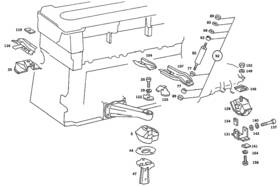
( Manufacturer Part Number: 123-240-22-18 ), ( Part Type: Bushing ), ( Genuine Oem: Yes ), ( Manufacturer Warranty: 1 Year ), ( Fitment Type: Direct Replacement ), ( Make: Mercedes-benz ), ( Parts Included: Only Part Reference 128 On The Diagram Is Included )
Review MERCEDES benz Genuine Rubber Bushing fits 300CD 1985
The **Mercedes-Benz 123-240-22-18 Rubber Bushing** is a precision-engineered suspension component designed exclusively for select models within the Mercedes-Benz W123 series, including the iconic 200, 230, 240, and 280 series from the late 1970s through the early 1980s. This high-performance rubber bushing serves as a critical link between the vehicle s suspension arms, control arms, and steering linkages, ensuring smooth, controlled movement while absorbing road imperfections, vibrations, and dynamic forces. Crafted from durable, high-grade synthetic rubber reinforced with internal steel wire or fabric layers, this bushing is engineered to withstand the rigors of daily driving, off-road excursions, and extended use without premature degradation or failure. Its robust construction minimizes metal-to-metal contact, reducing wear on adjacent components like ball joints, tie rods, and sway bars, thereby extending the lifespan of the entire suspension system. The 123-240-22-18 designation indicates its specific fitment for the front or rear lower control arms, depending on the model variant, ensuring an exact match with OEM tolerances for optimal handling, ride comfort, and alignment stability. Whether restoring a classic W123 to its original glory or upgrading an existing suspension setup, this bushing delivers reliable performance, precise articulation, and long-term durability, making it an indispensable part for enthusiasts and mechanics seeking authenticity and performance.
### **Pros and Cons of Buying a Mercedes-Benz 123 Series (W123) 240D/220/180 Rubber Bushing (Original or Replacement)**
The **Mercedes-Benz 123 Series (W123)**, particularly the **240D, 220, and 180 models**, is a classic and highly sought-after vehicle among enthusiasts. When restoring or maintaining one, the **rubber bushings** critical components that connect suspension and steering parts play a vital role in ride quality, handling, and longevity. Below is a detailed breakdown of the pros and cons of purchasing these bushings, whether original or aftermarket replacements.
---
### **Pros of Purchasing Mercedes-Benz 123 Series Rubber Bushings**
1. **Preservation of Originality and Value**
- If you own a **restored or show-quality W123**, using **OEM or high-quality aftermarket bushings** ensures the vehicle retains its authenticity, which is crucial for collectors and classic car enthusiasts. Original or period-correct replacements enhance resale value.
- Many classic car buyers and restorers prioritize **original or factory-matched parts** to maintain the car s integrity.
2. **Improved Ride Comfort and Handling**
- Worn or degraded rubber bushings can cause **excessive vibration, clunking noises, and poor alignment**, detracting from the driving experience. Replacing them restores smoothness, especially noticeable on rough roads or over speed bumps.
- Properly functioning bushings reduce **transferred road noise and harshness**, making the car more comfortable for daily driving.
3. **Prevents Further Damage to Suspension Components**
- Bushings act as **shock absorbers** between metal parts (e.g., control arms, sway bars, and subframes). When they fail, they can lead to:- **Loose or misaligned suspension parts**, causing uneven tire wear.
- **Stress on ball joints, tie rods, and bushings**, leading to premature failure.
- Replacing them proactively avoids **costlier repairs** down the line, such as replacing a damaged subframe or control arm.
4. **Compatibility with Modifications**
- If you plan to **lower the car, replace shocks, or adjust suspension geometry**, new bushings are often necessary to ensure proper fitment and function. Aftermarket bushings (e.g., **Delrin or polyurethane**) can also enhance performance for modified setups.
5. **Availability of High-Quality Aftermarket Options**
- While **OEM bushings** (from a dismantled W123) are ideal for purists, **reputable aftermarket brands** (e.g., **Delrin, polyurethane, or rubber compounds from manufacturers like **Sparco, Quaife, or Wilwood**) offer:
- **Longer lifespan** than standard rubber (especially polyurethane, which resists oil and heat better).
- **Better durability** in extreme conditions (e.g., off-roading or heavy loads).
- **Easier installation** (some bushings come pre-lubricated or with installation tools).
6. **Cost-Effective Maintenance**
- Replacing bushings is a **relatively inexpensive** maintenance task compared to major suspension overhauls. A full set of bushings (e.g., for control arms, sway bars, and subframe) typically costs **$100 $400**, depending on whether they are OEM or aftermarket.
- DIY installation is possible with basic tools, saving labor costs.
7. **Enhanced Safety**
- Worn bushings can lead to **sudden steering wander or suspension collapse**, posing a safety risk. Replacing them ensures **consistent steering response and structural integrity**.
8. **Aesthetic and Functional Restoration**
- For a **full restoration**, replacing bushings (along with other suspension components) ensures the car drives and feels like it did when new. This is especially important for **show cars** where every detail matters.
---
### **Cons of Purchasing Mercedes-Benz 123 Series Rubber Bushings**
1. **Limited Availability of OEM Parts**
- **Original bushings** from a dismantled W123 are **hard to find** and often **expensive** due to their rarity. Many suppliers no longer stock them, forcing buyers to rely on:
- **EBay, classic car parts auctions, or dismantlers**, which can be unreliable.
- **Reproduction parts**, which may not match the original fit or feel perfectly.
- If you **prioritize authenticity**, sourcing OEM bushings can be **time-consuming and costly**.
2. **Aftermarket Quality Variations**
- Not all aftermarket bushings are created equal. Some common issues include:- **Cheap rubber compounds** that degrade quickly under heat or oil exposure.
- **Poor fitment** due to slight dimensional differences, leading to **looseness or binding**.
- **Polyurethane bushings** (while durable) can be **stiffer** than original rubber, affecting ride comfort.
- **Counterfeit or low-quality bushings** may fail prematurely, leading to **repeat replacements and frustration**.
3. **Installation Challenges**
- Some bushings (e.g., **subframe bushings**) require **specialized tools** (presses, torque wrenches) or **experience** to install correctly. Improper installation can lead to:
- **Bushings not seating properly**, causing premature wear.
- **Damage to surrounding components** (e.g., stripping bolt threads).
- If you re not comfortable with suspension work, you may need to **pay a mechanic**, adding to costs.
4. **Potential for Overkill in Some Cases**
- If the car is **only used occasionally** or for **static display**, replacing bushings may be **unnecessary** unless they are visibly worn or causing issues.
- For **budget restorations**, some owners prioritize **more visible or critical components** (e.g., engine, transmission, interior) over suspension bushings.
5. **Cost of Specialized Aftermarket Options**
- While aftermarket bushings are often **cheaper than OEM**, **high-performance or polyurethane bushings** can be **more expensive** than standard rubber replacements.
- **Delrin or polyurethane bushings** (e.g., from **Sparco or Quaife**) are **long-lasting** but may not be worth the investment for a **casual driver**.
6. **Compatibility Issues with Modified Suspensions**
- If the car has been **lowered, widened, or modified**, some aftermarket bushings may **not fit correctly**, requiring **custom or specialized parts**.
- **Polyurethane bushings**, while durable, can **transfer more road noise** and may not feel as smooth as original rubber.
7. **Environmental and Wear Factors**
- **Rubber bushings degrade over time** due to:- **Oil leaks** (from seals or struts) that soften the rubber.
- **UV exposure** (if stored outdoors).
- **Extreme temperatures** (heat can make rubber brittle; cold can make it stiff).
- Even **new bushings** may wear out faster if the car is driven hard or in harsh conditions.
8. **Time-Consuming Research for the Right Parts**
- Selecting the **correct bushings** for a W123 requires research, as there are **many variations** (e.g., **240D vs. 220 vs. 180**, left/right differences, front/rear differences).
- Some bushings (e.g., **sway bar links**) may require **specific part numbers** to match the exact model year.
---
### **Conclusion**
Buying **Mercedes-Benz 123 Series (W123) rubber bushings** whether original or aftermarket is a **necessary and beneficial** investment for maintaining or restoring a classic car. The decision ultimately depends on your **priorities, budget, and intended use** of the vehicle.
- **If you value authenticity, plan to keep the car long-term, or are restoring it for show**, **OEM or high-quality aftermarket bushings** (e.g., **Delrin or polyurethane**) are worth the investment. They ensure **proper fitment, durability, and driving feel**.
- **If you re on a budget or the car is used infrequently**, **standard aftermarket rubber bushings** (from reputable brands) can provide a **good balance of cost and performance**.
- **If you re modifying the suspension**, consider **polyurethane or Delrin bushings** for better durability, but be aware they may alter the ride quality.
**Avoid cheap or unknown brands**, as they can lead to **premature failure and frustration**. Always **inspect bushings regularly** for cracks, oil leaks, or excessive play, as early replacement prevents **costlier damage**.
---
### **Final Recommendation**
1. **For Purists & Restorers:**- **Use OEM bushings** if available (from a trusted dismantler or auction).
- If OEM is unavailable, **high-quality aftermarket bushings** (e.g., **Sparco, Quaife, or Wilwood polyurethane**) are the best alternative for **longevity and performance**.
2. **For Budget Restorations or Occasional Drivers:**- **Standard aftermarket rubber bushings** (e.g., **
Details:
Shipping Carrier substitutions may be made at our determination in an attempt to reduce shipping cost the customer. Electrical parts are not returnable. Parts must be resalable and in the original packaging.
part #: 1232402218 prices
- $114.36-$180.68
specifications engimou:
- for models: 300cd
- for makes: Mercedes
- for years: 1985
- mpn: 123-240-22-18
- part type: Bushing
- genuine oem: Yes
- manufacturer warranty: 1 Year
- fitment type: Direct Replacement
- make: Mercedes-benz
- parts included: Only Part Reference 128 On The Diagram Is Included
returns engimou:
- policy: Returns Accepted
- paid by: Seller
- time: 30 Days
seller engimou:
- # reviews: 2108
- city: San Diego, California
- rating: 99.7%
general engimou:
- Car Truck Parts Accessories > Engines Engine Parts > Engine Mounts
- condition: New
offer engimou:
- quantity: 1
- availability: In Stock
- sold: 0
- started: May 8, 2026
- options: Ship-to-home
payments engimou:
- wallet: Paypal
- other
- credit card: Mastercard
shipping engimou:
- class: Standard
- transit: 6-12 Days
- cost: $21.05
- service: Standard
- type: Fixed
Mercedes 123-240-22-18 Is Similar To:
- 1072412313 Mercedes Nos Benz Right (40.8% similar) Genuine new old stock right motor mount for mercedes benz R107 model's...(July 3rd, 2017)
- 1072412413 Mercedes Nos Benz Left (37.1% similar) Genuine new old stock left motor mount for mercedes benz R107 model's...(July 3rd, 2017)
- 111 096 0645 06 45 1110960645 Mercedes Benz Alternator Mounting Bracket Belt Tensioner (31.6% similar) Warranty on electronic devices is void if identifying mark removed or has sign of tampering. Item will come as pictured. Up for sale is a 2003 R170 mercedes benz SLK230 alternator bracket with pulleys and pensioner oem...(May 15th, 2018)
- 1152230504 Mercedes Benz Motor Engine Mount Oem (36% similar) ...(October 28th, 2018)
- 1162235104 Mercedes-benz Mercedes Benz W126 (44.9% similar) Mercedes engine mount support...(August 20th, 2017)
- 1232411713 Genuine Mercedes New Engine (54.9% similar) 95 and is only available to the USA. To ship the parts, you would get a credit of or less. For some heavier items shipping starts at the price is as it states on. Assuming it cost standard shipping is sent via FedEx smart post which a 5-9 day economy service. No further shipping discounts or savings...(January 6th, 2018)
- 163 240 03 18 Rein Automotive Mercedes Benz Transmission Mount (42.9% similar) New ren transmission mount. Expedited shipping. Fast shipping. Shipping cost is only for US,48 lower states. Up for sale same working day shipping...(March 3rd, 2018)
- 1642401318 Mercedes-benz Mercedes Oem 10-11 (44.9% similar) ...(October 8th, 2017)
- 1662400602 Mercedes-benz Mercedes Oem Engine (46.3% similar) Est, Mon to Fri...(April 27th, 2017)
- 1662406417 Mercedes-benz Mercedes Gl350 Ml350 (42.2% similar) Many different variables go into what parts fit vehicles. Therefore some of the boxes or original packaging may be slightly scuffed, dirty, show other signs having been handled stored. As long the part shows no signs of having been installed slide marks on electrical tabs, circles around screw holes...(February 13th, 2018)
- 1770300000 Mercedes-benz Mercedes Oem C63 (38.1% similar) Est, Mon to Fri...(April 27th, 2017)