TOYOTA 12309-31080 Rod Engine
fits make: Toyota.
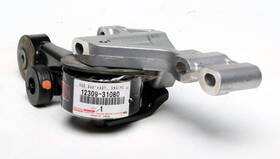
( Manufacturer Part Number: 12309-31080 ), ( Type: Engine Mount ), ( Manufacturer Warranty: 1 Month ), ( Material: Steel ), ( Vintage Part: No ), ( Country Of Origin: Japan ), ( Placement On Vehicle: Front )
Review TOYOTA Genuine Rod Sub assy Engine 1230931080 New Oem
The **Toyota 12309-31080 Rod Sub-Assembly** is a precision-engineered component designed to deliver optimal performance and reliability within Toyota s high-efficiency internal combustion engines. This critical sub-assembly is integral to the crankshaft mechanism, playing a pivotal role in converting linear piston motion into rotational torque, thereby driving the engine s power output. Crafted from high-grade forged steel, the rod sub-assembly features a robust **connecting rod** and **small end bearing cap**, both meticulously machined to exacting tolerances to ensure minimal friction and maximum durability. The rod s **big end** is equipped with a **split bearing cap** secured by high-strength bolts, allowing for precise alignment and load distribution across the crankshaft journals. The **small end** incorporates a **bushing or sleeve**, often reinforced with a thin-walled design to accommodate the piston s wrist pin, ensuring smooth articulation while withstanding the immense forces generated during combustion cycles. Engineered to meet Toyota s stringent quality standards, this sub-assembly is treated with advanced heat-treating processes, such as induction hardening or nitriding, to enhance its fatigue resistance and extend its operational lifespan under high-stress conditions. Whether installed in a **4-cylinder or 6-cylinder engine** (common in models like the Toyota Corolla, Camry, or RAV4), this rod sub-assembly is engineered to maintain structural integrity even under the most demanding driving scenarios, including high RPM, heavy loads, or extreme temperatures. Its seamless integration with complementary engine components such as the crankshaft, pistons, and cylinder block ensures efficient power transfer while minimizing wear, making it an indispensable part of Toyota s reputation for long-lasting, high-performance automotive engineering.
**Analysis of buying a Toyota Part Number 12309-31080 (Rod Sub-Assembly for Engine)**
### **Pros of purchasing a Part**
1. **OEM Quality and Reliability** Toyota parts are engineered to meet strict manufacturing standards, ensuring durability and compatibility with the engine. This reduces the risk of premature failure compared to aftermarket alternatives.
2. **Warranty Coverage** If purchased from an authorized Toyota dealer or a reputable supplier, the part may come with a warranty, providing peace of mind against defects.
3. **Direct Fitment** The part is designed specifically for Toyota engines (likely used in models like the 4-cylinder or 6-cylinder engines from the 1990s 2000s), ensuring an exact fit without modifications.
4. **Resale Value of the Engine** If you plan to rebuild or resell the engine, an OEM rod sub-assembly maintains higher resale value compared to aftermarket or salvage parts.
5. **Performance Consistency** Since the part is factory-built, it will perform consistently with the rest of the engine components, reducing the risk of mismatched tolerances that could lead to wear or failure.
6. **Easier Installation** OEM parts often come with clear instructions and may require fewer adjustments during installation compared to aftermarket alternatives that might need machining or customization.
7. **Long-Term Cost Savings** While the upfront cost may be higher, the longevity of an OEM part can offset long-term repair expenses associated with cheaper, lower-quality alternatives.
---
### **Cons of purchasing a Part**
1. **Higher Cost** OEM parts are typically more expensive than aftermarket or salvage equivalents. For example, a new rod sub-assembly may cost significantly more than a rebuilt or used version.
2. **Limited Availability** Depending on the engine model and year, finding a new OEM part may be difficult, especially if the engine is no longer in production. You may need to source it from a Toyota parts distributor, which could involve longer lead times.
3. **Potential Overkill for Minor Repairs** If the rod is only slightly damaged (e.g., minor scoring or wear), replacing the entire sub-assembly may be unnecessary. In such cases, a rebuilt rod or a single rod replacement could be a more cost-effective solution.
4. **Counterfeit or Salvage Risks** If purchasing from an untrusted seller (e.g., eBay, Craigslist, or unlicensed dealers), there is a risk of receiving a counterfeit, salvaged, or refurbished part that doesn t meet OEM standards.
5. **Labor Costs** Installing an OEM rod sub-assembly may require professional labor, especially if the engine is complex or if the mechanic is unfamiliar with Toyota-specific procedures. This adds to the total cost of the repair.
6. **Environmental and Ethical Concerns** New OEM parts contribute to waste if the engine is being replaced rather than repaired. If sustainability is a priority, considering a rebuilt or recycled part may be preferable.
7. **Time to Source** If the part is backordered or out of stock, the repair timeline could be delayed, which may be problematic for urgent projects.
---
### **Conclusion**
Buying the Toyota 12309-31080 rod sub-assembly is a **strong choice for those prioritizing reliability, longevity, and exact fitment** in their engine rebuild or repair. The OEM quality ensures compatibility and reduces the risk of future issues, making it ideal for serious DIYers or professionals who want to avoid aftermarket risks. However, the higher cost and potential availability challenges mean it may not be the best option for budget-conscious repairs or minor fixes where a rebuilt or single-rod solution would suffice.
If the engine is critical to your vehicle s performance or if you re undertaking a long-term project, the investment in an OEM part is justified. Conversely, if cost is a major factor or the damage is minor, exploring aftermarket or rebuilt alternatives could be more practical.
---
### **Recommendation**
1. **Verify the Need for a Full Sub-Assembly** Before purchasing, confirm whether the entire rod sub-assembly needs replacement or if individual components (e.g., just the rod or bearings) can be replaced. This could save money.
2. **Source from an Authorized Dealer or Reputable Supplier** Purchase from a Toyota dealership, a trusted online retailer (e.g., RockAuto, Amazon, or eBay with seller guarantees), or a parts specialist to avoid counterfeit or salvage parts.
3. **Compare Prices** Check prices across multiple suppliers to ensure you re getting a fair deal. Sometimes, aftermarket brands like Fel-Pro or Moroso offer comparable quality at a lower cost.
4. **Consider Rebuilt or Remanufactured Options** If the part is available in rebuilt form (e.g., from a machine shop or Toyota remanufacturer), it may offer a middle ground between OEM and aftermarket in terms of cost and quality.
5. **Factor in Labor Costs** If you re not experienced with engine repairs, weigh the cost of professional installation against the potential savings of DIY.
6. **Check for Warranty or Return Policies** Ensure the supplier offers a warranty or return option in case the part is defective or incompatible.
7. **Evaluate Long-Term Goals** If this is part of a larger engine project (e.g., a full rebuild), the OEM part may be worth the investment. If it s a one-time fix, weigh the pros and cons carefully.
**Final Verdict:**For most serious engine rebuilds or when replacing a failed rod sub-assembly, the **Toyota 12309-31080 OEM part is the best choice** due to its reliability and compatibility. However, if budget constraints or minor damage are factors, explore rebuilt or aftermarket alternatives first. Always prioritize quality over cost when it comes to critical engine components.
Details:
Fast and free shipping.
part #: 1230931080 prices
- $103.06-$154.00
specifications engimou:
- for makes: Toyota
- mpn: 12309-31080
- type: Engine Mount
- manufacturer warranty: 1 Month
- material: Steel
- vintage part: No
- country of origin: Japan
- placement on vehicle: Front
offer engimou:
- quantity: 1
- sold: 0
- started: May 2, 2026
- options: Ship-to-home
- availability: In Stock
shipping engimou:
- cost: $0.00
- class: Economy
- transit: 5-11 Days
- service: Economy
- type: Fixed
general engimou:
- Car Truck Parts Accessories > Engines Engine Parts > Engine Mounts
- condition: New
returns engimou:
- paid by: Seller
- policy: Returns Accepted
- time: 30 Days
payments engimou:
- credit card: Diners-club
- other
- wallet: Paypal
seller engimou:
- city: Shirley, New York
- rating: 100.0%
- # reviews: 1207
Toyota 12309-31080 Is Similar To:
- 0g151331 Toyota Oem Prius Fwd Hybrid Automatic Transmission Flywheel (15% similar) Make sure to inspect the item thoroughly in pictures above before buying. What you see in the pictures is exactly get, unless mentioned otherwise...(November 7th, 2018)
- 104-1520 Engine Mount Rear Fits Toyota Camry (27.5% similar) Our team of certified car quest counter pros are Best in the biz. So forget the rest and try Best. You won't be disappointed...(September 12th, 2018)
- 104-1808 Engine Mount Front Fits Toyota (26.9% similar) Location: RM1, box 15...(August 20th, 2018)
- 104-1903 Engine Torque Strut Fits Toyota Camry (25.2% similar) Brand: beck anally part number: item condition: new: engine torque strut manufacturer brand quantity needed: 1 position: front...(September 2nd, 2018)
- 104-2185 Engine Torque Strut Fits Toyota Sienna (25% similar) All parts come with a 1-YEAR warranty and 30-DAY return period. That section provides detailed information about the part and compatible vehicles...(March 6th, 2019)
- 104-2312 Engine Mount Front Fits Toyota Prius (23.6% similar) At adopts...(September 11th, 2018)
- 104-2352 Engine Mount Rear Fits Toyota (27.2% similar) Telephone hours 9:00 am - 5:00 pm est. Wiki auto parts inc. Engine mount rear beck anally fits toyota RAV4 if you want to do not hesitate fill out our form and team will attend as soon possible...(November 17th, 2018)
- 1166 Rodatech Engine Motor Mount For Toyota Paseo Tercel Front Right (27.1% similar) Each product is quality inspected and 100 tested. Shipping our free offer is only valid for the continental USA. Oe-comparable mounting provisions ensure precise fit. 5l 4 speed this item includes: one year warranty. Matrix parts service corp. Parts free of any damages and must have all hardware. ...(December 11th, 2018)
- 12305-21060 Toyota Engine Mount (29.2% similar) ...(April 23rd, 2018)
- 12305-22240 1230522240 Autoacer Engine Mount New Motor For Toyota Corolla Matrix Pontiac (30.1% similar) Brand new premium quality fits oem...(June 2nd, 2018)
- 12305-28220 Toyota Scion Genuine Side Bracket (38.2% similar) Shipping carrier substitutions may be made at our determination in an attempt to reduce cost the customer. Manual trans. Electrical parts are not returnable. Parts must be resalable and in the original packaging...(March 18th, 2019)