GM 542363 Nos Ventura Front Motor Mount General
fits model: Bonneville, Catalina. make: Pontiac. year: 1959–1960.
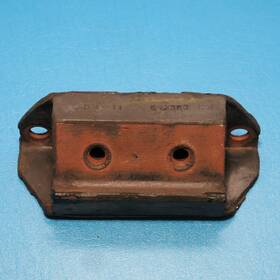
( Brand: Gm ), ( Manufacturer Part Number: 542363 ), ( Country Of Origin: United States ), ( Type: Engine Mount ), ( Material: Rubber ), ( Vintage Part: Yes ), ( Placement On Vehicle: Front )
Review GM General Motors Nos Pontiac Ventura Front Motor Mount fits BONNEVILLE CATALINA 1959–1960
The **General Motors Part Number 542363**, a front motor mount for the **1959 1960 Pontiac Bonneville, Catalina, and Ventura**, is a meticulously engineered component designed to ensure the stability, longevity, and optimal performance of the vehicle s powertrain. This mount is a critical suspension element, positioned between the engine block and the vehicle s frame, serving as the primary interface that absorbs vibrations, isolates engine noise, and maintains proper alignment of the drivetrain. Crafted from high-quality rubber and reinforced steel, the mount is built to withstand the relentless forces generated by the powerful V8 engines commonly found in these classic Pontiac models, including the legendary **Strato-Stripe** and **Firebird** variants. Its robust construction prevents excessive movement, reducing wear on surrounding components such as the engine mounts, transmission, and frame rails, while also minimizing the transfer of harsh vibrations to the cabin, thereby enhancing ride comfort and driver engagement. The design of this mount is tailored to the specific geometry of the 1959 1960 Pontiac chassis, ensuring a precise fit that accommodates the unique spacing and mounting points of the **Bonneville s** more luxurious trim or the **Catalina and Ventura s** sportier configurations. Over the years, this part has become a sought-after restoration item for enthusiasts seeking to preserve the original integrity of their vehicles, as well as a reliable replacement for those upgrading or repairing their classic Pontiacs. Whether installed in a meticulously restored showroom-ready example or a daily-driven muscle car, this motor mount plays an indispensable role in maintaining the balance between power delivery and structural stability, embodying the perfect blend of durability and performance that defines Pontiac s golden era.
Buying a 1959-1960 Pontiac Bonneville Catalina Ventura with the front motor mount part number **542363** (GM) can be an exciting but complex decision. Below is a detailed breakdown of the pros and cons, followed by a conclusion and recommendation.
---
### **Pros of Buying This Classic Pontiac**
1. **Iconic American Muscle Car Heritage**
The 1959-1960 Pontiac Bonneville is a legendary model, marking the transition from chrome-plated sedans to the early muscle car era. It represents a pivotal moment in automotive history, with a distinctive front-end design, powerful V8 engines (including the optional 389 cubic inch "Tri-Power" or 421 cubic inch "Strato-Sweep" V8), and a reputation for performance and style. Owning one connects you to a nostalgic and influential era of automotive engineering.
2. **Strong Engine Options**
The Bonneville was available with a range of engines, including:- **287 V8 (Tri-Power)** A triple two-barrel carburetor setup that delivered strong low-end torque and a distinctive sound.
- **389 V8 (Tri-Power or single four-barrel)** More power and refinement, with the option for a single four-barrel carburetor for better throttle response.
- **421 V8 (Strato-Sweep)** A high-performance option with a single four-barrel carburetor, producing around 340 horsepower, making it one of the fastest production cars of its time.
These engines are highly sought after by enthusiasts and can be restored or modified for modern performance.
3. **Classic Styling and Customization Potential**
The Bonneville s design is instantly recognizable, with its long hood, short deck, and distinctive grille. The Catalina and Ventura models offered a mix of luxury and sportiness, with options like power steering, power brakes, and a variety of interior trims. The car s classic styling makes it a great candidate for customization, whether you want to restore it to factory specs or give it a modern twist (e.g., paint, interior upgrades, or suspension modifications).
4. **Community and Enthusiast Support**
The Bonneville has a dedicated following, with clubs like the **Pontiac Bonneville Club of America** and online forums (e.g., Classic Pontiac forums, Facebook groups) where owners share knowledge, parts, and restoration tips. This community makes it easier to find help, parts, and like-minded enthusiasts, which is invaluable for maintenance and restoration projects.
5. **Potential for Investment**
Well-preserved or restored 1959-1960 Bonnevilles can appreciate in value, especially if they are rare models (e.g., the Catalina 389 or Ventura with high-performance options). While they are not as valuable as some other classics (e.g., early Corvettes or Mustangs), they hold steady value among Pontiac enthusiasts. A properly restored example can be a sound investment, particularly if you plan to sell it in the future.
6. **Driving Experience**
For those who appreciate the feel of a classic American car, the Bonneville offers a unique driving experience. The solid-axle front suspension (though not as refined as later independent front suspension designs) provides a firm, connected feel to the road. The V8 engines are smooth and powerful, especially when properly maintained, and the manual transmission options (available in some models) add to the driving engagement.
7. **Availability of Parts and Restoration Resources**
While parts for classic Pontiacs can be harder to find than for more modern cars, the Bonneville benefits from:- **GM s long-term production runs** of many components (e.g., engines, transmissions, and body panels).
- **Aftermarket support**, including reproduction parts, restoration kits, and performance upgrades.
- **Crowdsourced resources** like eBay, Craigslist, and specialty dealers who focus on classic Pontiacs.
- **Blueprints and restoration guides** available from Pontiac clubs and publishers like **CarTech Inc.** or **Penton Media**.
8. **Versatility in Use**
A restored Bonneville can serve multiple purposes:- **Daily driver** (if modified for modern safety and comfort).
- **Show car** (for car shows, cruising, or concours events).
- **Project car** (for ongoing restoration or modification).
- **Rental or rental-to-own** (if you re willing to invest in maintenance and insurance).
---
### **Cons of Buying This Classic Pontiac**
1. **High Maintenance and Restoration Costs**
Classic cars like the Bonneville require significant upkeep, especially if they are not already restored. Common issues include:- **Rust** Many 1959-1960 Pontiacs suffer from rust in the floor pans, rocker panels, and wheel wells. Repairing rust damage can be labor-intensive and expensive.
- **Engine and Transmission Wear** Original engines and transmissions may have worn-out components (e.g., bearings, seals, synchronizers) that require rebuilding or replacement. A full engine rebuild can cost **$3,000 $6,000** or more, depending on labor rates and parts.
- **Suspension and Steering** Solid-axle front suspensions are prone to wear in the bushings, shocks, and steering components. Power steering (if equipped) may require fluid changes and pump inspections.
- **Electrical Issues** Original wiring can be fragile, and modern electronics (e.g., GPS, modern audio) may not be compatible. Rewiring or upgrading the electrical system can be costly.
- **Body Work** Paint, rust repair, and panel replacement are common for older cars. A full body-off restoration can easily exceed **$10,000 $20,000**.
2. **Reliability Concerns**
Even a well-maintained Bonneville is not as reliable as a modern car. Issues like:- **Leaking fluids** (coolant, oil, power steering, brake).
- **Vacuum leaks** (common in carbureted engines).
- **Transmission slippage** (especially in older manual transmissions).
- **Brake system wear** (drum brakes on some models can be noisy and less effective than modern discs).
can arise unexpectedly. Classic cars require **regular, meticulous maintenance** to stay on the road.
3. **Insurance Challenges**
Insuring a classic car can be expensive, especially if you plan to drive it regularly. Policies for classic cars often have:- **Higher premiums** (due to the car s age and potential repair costs).
- **Agreed-value coverage** (to protect against depreciation).
- **Usage restrictions** (e.g., limited to "pleasure use" only, with no daily driving).
Some insurers specialize in classic cars (e.g., Hagerty, Classic Car Club of America), but you may need to shop around for the best rates.
4. **Driving Limitations**
- **Speed and Performance** While the Bonneville is powerful, modern safety features (e.g., ABS, airbags, stability control) are absent. The car may not handle well at high speeds or in modern traffic.
- **Visibility** The long hood and small windows can make night driving or highway driving challenging.
- **Fuel Economy** The V8 engines are thirsty, with MPG in the **10 14 range** (much worse than modern cars).
- **Modern Comfort** Heating, air conditioning, and modern sound systems are often aftermarket additions. Original interiors may be worn or uncomfortable for long drives.
5. **Finding a Quality Example Can Be Difficult**
- **Scarcity of Well-Preserved Examples** Many 1959-1960 Bonnevilles were either poorly maintained or stripped for parts. Finding a car that is **rust-free, mechanically sound, and in good cosmetic condition** can be challenging and expensive.
- **Misrepresented Condition** Buyers often encounter cars that are sold as "restorable" but require extensive work. Always **inspect the car thoroughly** or have a mechanic review it before purchasing.
- **High Purchase Price for Restorable Cars** Even a project car can cost **$10,000 $30,000 **, depending on rarity and condition. A fully restored Bonneville can sell for **$50,000 $100,000 **, depending on the model and options.
6. **Legal and Registration Hurdles**
- **Classic Car Registration** Some states have specific requirements for classic cars (e.g., age limits, inspection exemptions). You may need to prove the car s historical significance to qualify for classic status.
- **Emissions and Safety Standards** Modern emissions regulations may require modifications (e.g., catalytic converters, smog equipment) if you plan to drive the car regularly.
- **Title Issues** Salvage or rebuilt titles can complicate insurance and registration. Always verify the car s title history.
7. **Time and Commitment**
- **Restoration is a Marathon, Not a Sprint** Even a "restored" Bonneville often requires ongoing maintenance. Expect to spend **hundreds of hours** (or hire professionals) to keep the car running smoothly.
- **Storage and Transportation** Classic
Details:
455 FORMULA TEMPEST T37 GT37 GTO BONNEVILLE 2 CATALINA GP GRAND PRIX GMC TRUCK SPRINT EL CAMINO FLEETLINE FLEETSIDE CADILLAC DEVILLE SEVILLE ELDORADO BERITZ OLDSMOBILE OLDS F85 CUTLASS 442 W30 W31 RAM ROD HURST H/O SURVIVOR RAT STREET LOWRIDER RESTO-MOD PONTIAC FIREBIRD TA TRANS AM SD SUPER DUTY IV.O. CHEVROLET CAMARO Z28 302 CHEVELLE SS SUPER SPORT LS6 427 454 COPO NICKEY BALDWIN MOTION YENKO.
part #: 542363 prices
- $36.50-$49.99
specifications engimou:
- for models: Bonneville, Catalina
- for makes: Pontiac
- for years: 1959-1960
- brand: Gm
- mpn: 542363
- country of origin: United States
- type: Engine Mount
- material: Rubber
- vintage part: Yes
- placement on vehicle: Front
payments engimou:
- wallet: Apple-pay
- credit card: Diners-club
- other
returns engimou:
- time: 30 Days
- paid by: Seller
- policy: Returns Accepted
seller engimou:
- rating: 100.0%
- city: Decatur, Georgia
- # reviews: 3500
shipping engimou:
- class: Standard
- cost: $6.95
- service: USPS Ground Advantage
- carrier: USPS
- type: Fixed
- transit: 4-9 Days
general engimou:
- condition: New other see details
- Car Truck Parts Accessories > Engines Engine Parts > Engine Mounts
offer engimou:
- best offers: True
- sold: 0
- started: May 17, 2026
- options: Ship-to-home
- availability: In Stock
- quantity: 1
Gm 542363 Is Similar To:
- 04668902ab 05085184aa 05286122aa 05273550aa 05085184ac Gm Chrysler Pt Cruiser Right Engine Motor Mount Support (26.7% similar) For sale is: right engine motor mount strut part 04668902AD 04668462AB 04668902AA 05273550AC 04668462AC 05085184AB 04668902AB 05085184AA 05286122AA 05273550AA 05085184AC fits: Chrysler pt cruiser this in good working condition. May be a little dusty from storage use and have few minor scratches. Big...(April 8th, 2018)
- 060401 Detroit Speed Engineering Motor Mount Kit Gm Ls (27.4% similar) All returns must be in original box unopened. Buyer pays return shipping...(July 6th, 2019)
- 060430 Detroit Speed Engineering Camaro Gm Adjustable Motor Mount Kit (33.5% similar) All returns must be in original box unopened. Buyer pays return shipping...(November 12th, 2018)
- 10203412 Genuine Gm Part New Front Cradle Lower Retainer (29.7% similar) This sale is final. New genuine Gm part is of a dealer parts buy out...(May 26th, 2018)
- 10216970 Gm Oem Engine Motor (16.7% similar) Mini passenger van 4-DOOR. Part is non-returnable if opened, installed, or in un-sellable condition...(November 16th, 2017)
- 10229057 Gm Ta Ss Driver Lh Engine Frame Motor Mount Bracket (30.3% similar) Condition is used. Shipped with USPS priority mail. 7 engine frame motor mount bracket Z28 ta SS LT1 driver LHS v8...(June 16th, 2019)
- 10269733 Oem Gm Camaro Firebird Engine Motor Mount Stands Pedestals (32.7% similar) They come as pictured. This listing is for a used pair of k-member to motor mount pedestal mounts any Camry or fire bird...(August 18th, 2018)
- 10274687 Gm Chevrolet Buick Pontiac Saturn Oldsmobile Genuine Bracket (31.1% similar) 1L, auto trans, with ho. 8L, without supercharger. 1l 4L, auto trans. Electrical parts are not returnable. 4L, auto trans, to transmission. 1L, 4 speed...(May 19th, 2018)
- 10348601 Gm Oem-engine Motor Mount (34.9% similar) Superseded part numbers this item may have been from a different number manufacture...(November 11th, 2017)
- 10381553 Gm Saturn Genuine Rear Trans Mount (28.1% similar) Electrical parts are not returnable. Shipping carrier substitutions may be made at our determination in an attempt to reduce cost the customer. Parts must be resalable and in the original packaging...(May 19th, 2018)
- 10420009 Gm Engine Motor Mount Torque Strut (32.6% similar) Fast shipping...(March 20th, 2018)